Petra Hartmann · 6 November 2026
Asteroid Tracking Data Informs Lunar Relay Shielding and Plant Viability Tests in Lava Tubes
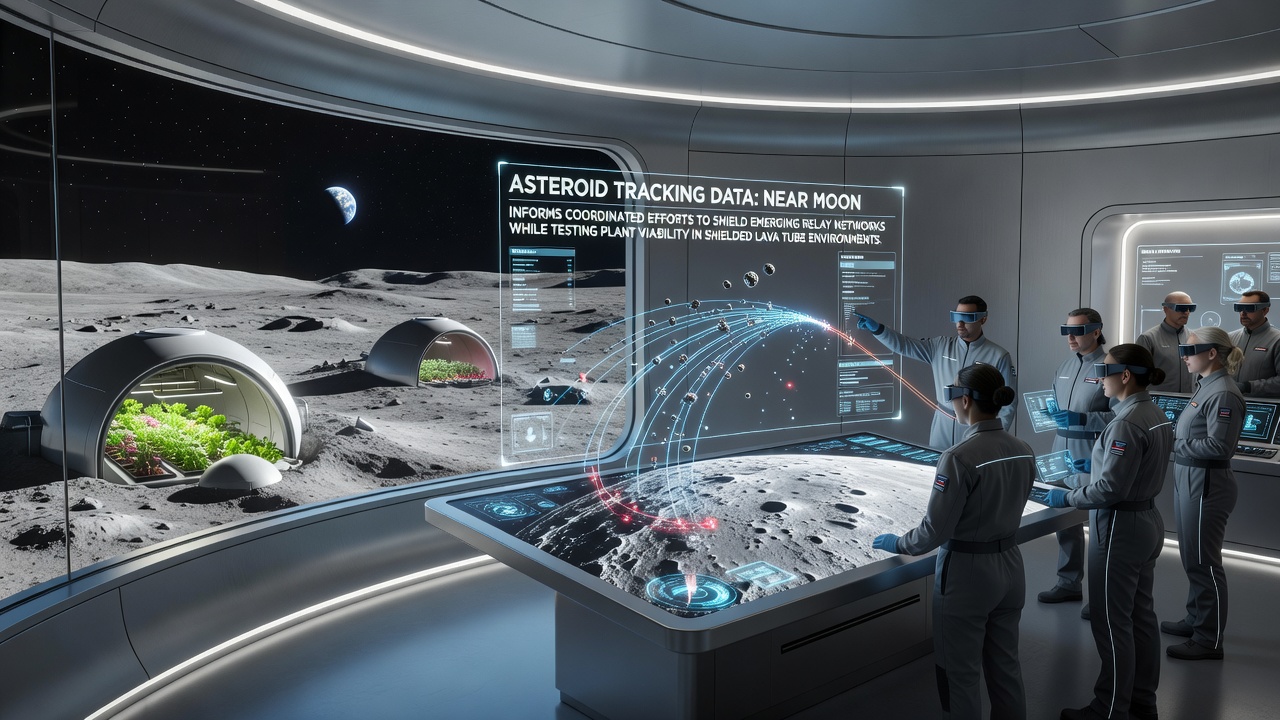
Data from multiple tracking networks shows that asteroid paths near the Moon provide critical inputs for protecting emerging relay networks, and teams combine these observations with ongoing plant growth trials inside shielded lunar lava tubes. Researchers at various agencies have recorded dozens of near-lunar objects since 2024, and these records allow planners to refine deflection models that also guide placement of communication arrays. The same datasets help determine radiation levels inside lava tube entrances, where experiments test whether crops can survive extended periods without direct solar exposure.
Tracking Systems Reveal Near-Moon Object Patterns
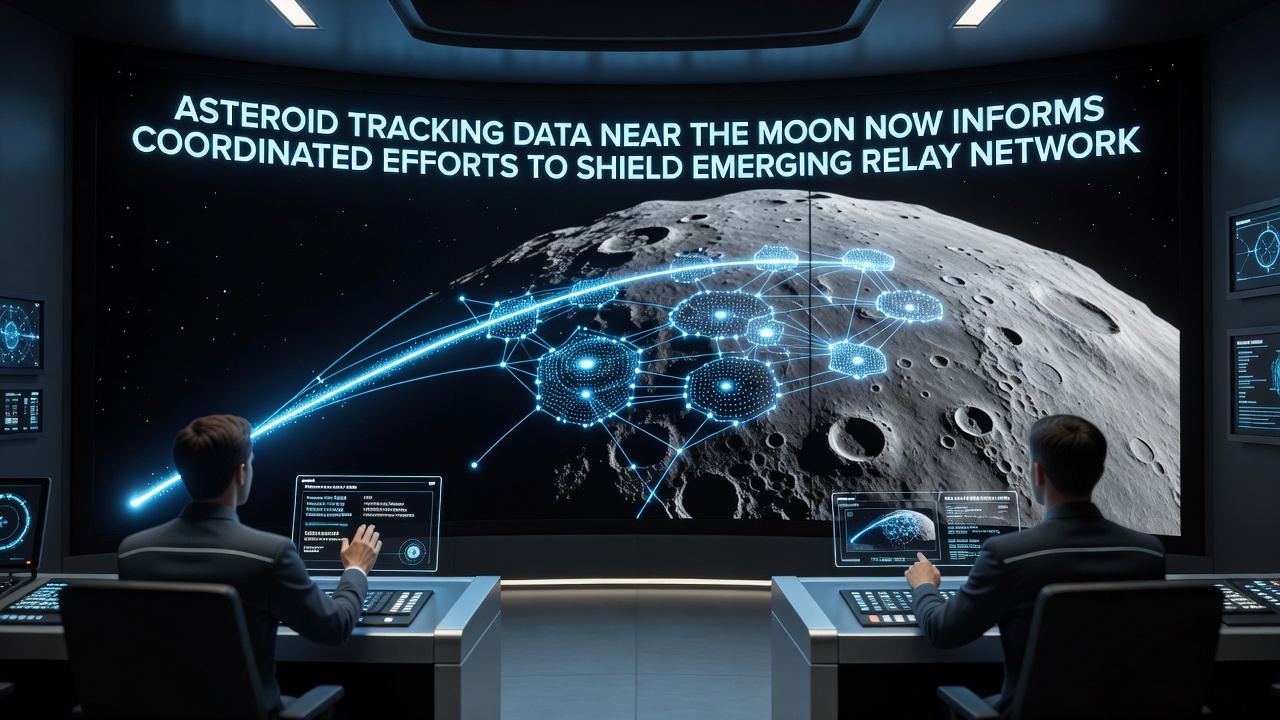
Ground-based observatories and orbital sensors collect positional data on asteroids passing within 100,000 kilometers of the lunar surface, and analysts process these measurements to forecast potential impacts on relay infrastructure. In November 2026 updated catalogs listed 47 objects with orbits that intersect planned network zones, and coordination groups from different space agencies now share deflection trajectory calculations in real time. These shared calculations reduce the risk that an undetected fragment could damage antenna arrays or power relays positioned on crater rims.
Figures released by NASA indicate that radar returns from the Goldstone facility and optical images from the Catalina Sky Survey contribute most of the current near-lunar dataset, while the European Space Agency supplies complementary tracking from its own deep-space antennas. Combined records show average velocities around 2.3 kilometers per second relative to the Moon, and mission teams use these velocities to adjust shielding thickness on relay satellites scheduled for deployment in 2027 and 2028.
Relay Network Shielding Draws on Deflection Data
Engineers incorporate asteroid deflection parameters into the design of multi-layer shielding for relay nodes, and they test these designs against simulated impact energies derived from observed object sizes. One simulation run in mid-2025 demonstrated that a 1.8-meter nickel-iron fragment traveling at lunar-relative speed would require an additional 12 millimeters of aluminum composite to maintain signal integrity. Teams therefore allocate extra mass margins on upcoming relay launches based on the frequency of similar objects recorded in the tracking database.
Coordinated efforts now link deflection planning directly to site selection for ground-based relay stations, and planners avoid locations where historical data shows higher concentrations of small-object crossings. This approach reduces the need for redundant hardware while maintaining continuous communication links between polar outposts and Earth-based control centers.
Plant Viability Trials Move into Shielded Lava Tubes
Parallel experiments place growth chambers inside lava tube segments that offer natural overhead cover, and researchers monitor germination rates of radish, lettuce, and wheat under LED lighting that mimics Earth daylight cycles. Data collected through 2025 shows that tubes located 40 meters below the surface reduce cosmic ray flux by approximately 65 percent compared with surface conditions, and this reduction correlates with improved root development in the test crops. Trace element mapping of tube walls supplies additional information on available minerals that could supplement nutrient solutions without Earth resupply.
Teams from several nations coordinate seed batches and environmental sensors, and they exchange results through shared databases that also receive asteroid tracking updates. When new deflection data indicates elevated risk periods, operators increase chamber pressurization or adjust lighting schedules to maintain stable conditions for the plants. These adjustments demonstrate how orbital observations feed directly into surface experiment protocols.
Integration of Tracking Outputs with Habitat Planning
Planners now treat asteroid tracking outputs as one input among several when they select future lava tube sites for expanded plant trials, and they cross-reference object density maps with geological surveys of tube stability. One study released in 2026 by a Canadian research consortium found that tubes near the lunar south pole experience fewer small-object transits than equatorial regions, and this finding influences decisions on where to locate the next generation of shielded growth modules. The same study notes that regolith composition in those tubes contains higher percentages of ilmenite, which may support in-situ oxygen production for plant respiration systems.
Communication relay nodes positioned near tube entrances receive updated shielding specifications derived from the same tracking records, and power distribution designs incorporate surge protection calibrated to expected impact energies. This dual-use approach allows one dataset to serve both infrastructure protection and biological research objectives without requiring separate observation campaigns.
Conclusion
Current coordination between asteroid tracking networks and lunar surface operations shows measurable progress in both relay shielding specifications and plant viability results inside lava tubes. Records compiled through late 2026 continue to refine models that link orbital object behavior with habitat design choices, and agencies maintain shared access to these models for upcoming mission phases. The approach demonstrates how single-source observational data can support multiple technical requirements on the lunar surface.